
Module 2: Resources Management and Foundations of the Circular Economy
LEARNING OUTCOMES
-
1.1.K1.
Define the concept of resource efficiency -
1.1.S1.
Describe the life cycle of a product and assess it environmental impact (using the example of a cotton t-shirt)1.1.S2.
Identify the differences between renewable and non-renewable resources -
1.1.RA1.
Demonstrate an understanding of resource footprints (carbon, water, material) and how to apply them in real-life decision making1.1.RA2.
Compare the principles of Degrowth and Doughnut Economics as models for sustainable development
IN THIS LESSON, you will learn about the fundamental problems of our current economic system
UNIT 2.1 – Fundamentals of Resource Management
The video focuses on the fundamentals of resource management in a world facing environmental limits and resource scarcity. It introduces key concepts of using resources effectively and efficiently, explores models for sustainable consumption and production (SCP), and emphasizes finding a practical balance between meeting human needs today and protecting the planet’s capacity for the future.
1. VIDEO
2. INTRODUCTION
With multiple environmental challenges and limited resources in the world it is important that people understand how to effectively and efficiently use resources. This unit “The Fundamentals of Resource Management” introduces the basic concepts of resource management and looks at models that promote sustainable consumption and production that meets our needs but keeps the planet safe. This module is about finding a balance between what people need and what the planet can handle.
2.1 Understanding Efficient Resource Use and Sustainable Consumption
In simple terms efficient resource use is “doing more with less”. We need to be able to maximize the value we get from natural resources while keeping in mind waste and harm reduction. This is one of the core principles of sustainable consumption and production which aids us to meet our needs without stripping the earth of its ecosystem. These principles involve reshaping how we design, produce and consume goods and services to ensure long term environmental sustainability.
Natural resources found plentiful in nature such as water, minerals, forests and fossil fuels can be classified into renewable and non-renewable categories. With responsible management renewable resources like solar, wind, wave or timber can be replenished over time. Due to the limited amount of non-renewable resources such as oil, gas and rare metals we need to find an efficient way to use these resources before they are exhausted completely.
In the wise words of Albert Einstein:
“We cannot solve our problems with the same thinking we used when we created them.”
This is a reminder that addressing today's environmental challenges requires a shift in mindset. Learning to embrace the regenerative, circular approaches will teach us to move from the wasteful models of consumption that once dominated.
2.2 Life Cycle Thinking and Resource Footprints
When we talk about the “life cycle” of something, we are talking about the full journey of the product or resource from its conception to use to how it is disposed of. This approach allows us to see the environmental impacts at each stage of a product's life.
Example: Take 1 cotton T–shirt.
This may seem harmless but if we go through its lifecycle, we will see the full environmental cost.
Stage 1: Cotton Cultivation
Water Use: It takes between 700-2,700 liters of water to produce cotton for ONE T-shirt. In one clothing factory that makes thousands of cotton T-shirts a day that's up to 20,000+ liters a day for just the T-shirts.
Pesticides & Fertilizers: Cotton farming relies heavily on the use of insecticides and fertilizers that can seep into the soil and run into water streams which can pollute them and leave them unsafe for human consumption.
Land Use: large areas of land and forests are cleared in order to grow and pick cotton. Deforestation can lead to habitat loss which affects the biodiversity of the area and lose their ability to provide essential services like clean air, climate regulation, and pollination.
Stage 2: Manufacturing
Energy Consumption: The manufacturing process of taking raw cotton through spinning, weaving and dyeing requires a huge amount of energy & electricity, with machines that run quickly, and continuously and at high temperatures. These machines often run on fossil fuels like oil, gas and coal to keep them going continuously which contributes to the production of CO2 and greenhouse gases which leads to environmental pollution.
Stage 3: Transportation
Carbon Emission: The journey of a T-shirt involved multiple stages of transport. Firstly, the cotton is transported to the factory when it is picked to be manufactured. It is then delivered to a different country to be finished where it is then shipped around the world to be sold in shops. This amount of transportation around the globe results in huge amounts of CO2 emissions being released.
Stage 4: Use Phase
Washing & Drying & Maintenance: The constant upkeep, cleaning and maintenance of clothes contributes hugely to a consumer's environmental footprint. This is because of the constant washing, drying & ironing which uses large amounts of energy, water and detergents. These detergents can leave an environmental impact on wildlife and biodiversity and the packaging may not be recyclable.
Stage 5: Disposal
This phase marks the end of the T-shirts journey, and it is a very critical point for environmental sustainability. Regrettably a huge percentage of clothing ends up in landfills or incinerators where they contribute to pollution and greenhouse gas emissions. Cotton, while biodegradable, is usually manufactured with synthetic dyes or are blended with fibers/materials that are non-biodegradable which slows down decomposition and can release harmful substances into the soil and air.
By using tools that measure the impact of our decisions, we will see how making more ecofriendly choices can have a huge impact on the planet. There are tools available that allow you to measure the impact of your choices that are known as resource footprints. Examples of these resources are carbon, water and material footprints. A carbon footprint shows how much greenhouse gas is released due to our activities while a water footprint tracks how much water is used. By understanding these resources, we can apply resource efficiency in real world scenarios like choosing products with a small environmental impact reducing your energy use or supporting companies that have sustainable and eco-friendly strategies & practices.
Life cycle thinking and footprint awareness help people to take responsibility for their actions. People can promote smarter, more responsible ways to use the resources available to them in all aspects of their lives. This could be repairing, buying second hand or encouraging businesses to adopt greener practices. Every action adds up when we think about the full life cycle of the things that we use.
By understanding the environmental cost of a product, it supports the principle of efficient resource use by motivating people to look beyond the surface and make more informed choices. By only focusing on the product, you ignore the life cycle of the product. By asking questions like how it was made and where it came from, it can lead to more conscious and sustainable consumption and product decisions.
2.3 Sustainable Consumption Models: Degrowth & Doughnut Economics
As challenging environmental issues grow, traditional models of economic growth are being questioned. There are 2 influential frameworks that offer alternative ways to think about how we consume and produce. These models are known as the Degrowth & Doughnut Economic Models, and they aim to balance human wellbeing with the planet's ecological limits.
Degrowth
Degrowth is a model that challenges the idea that economies must grow endlessly to become successful. Instead of constantly purchasing more stuff, it suggests we slow down. The end goal is to protect the environment, use resources wisely and focus on what really makes life better, like a healthy community. In theory this may look like shorter working weeks, more local production and consumption and less focus on material goods. For example, a clothing company may introduce a repair or renting service to reduce their production. This is what resource efficiency looks like in real life.
Doughnut Economics
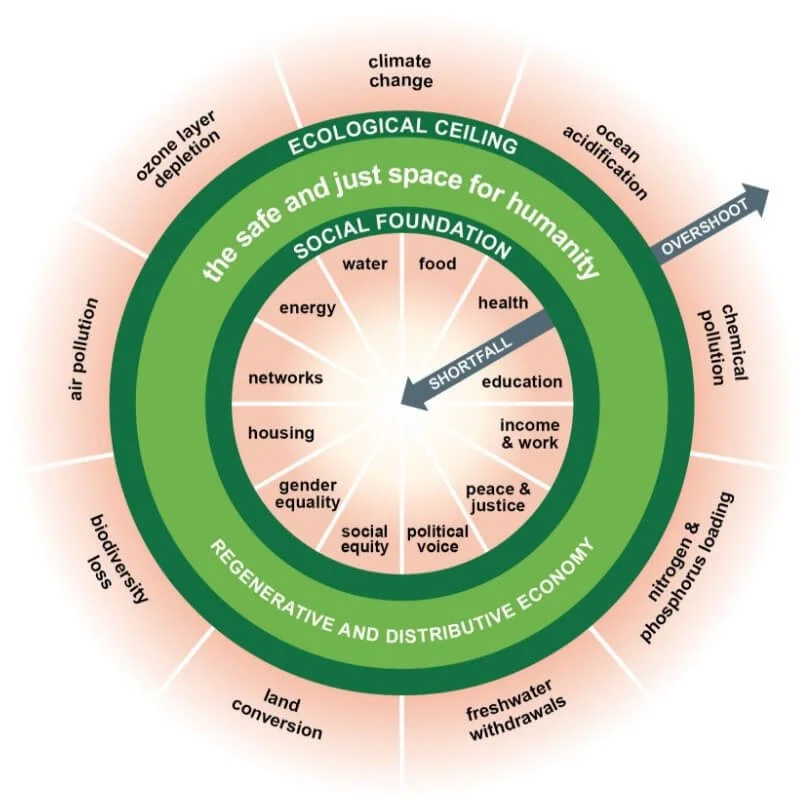
Doughnut Economics was developed by Kate Raworth who works in the world of economy. This model incorporates a safe and just space for humanity. The inside of the ring represents the social foundations like health, education & equality which are things all humans should have access to. The outside of the ring represents planetary boundaries which put limits on things like carbon emissions, biodiversity loss and water use. The space between is where sustainable development should happen.
This model allows us to responsibly promote resource use to ensure that humans can meet their needs without overstepping planetary limits. For example, a city using this principle might invest in green infrastructure, promote cycling over car journeys and support local food systems to help reduce emissions and improve quality of life.
Doughnut Economics Diagram
3. Case Study (1)
IKEA: Sustainable Sourcing & Circular Design
Their key practices include:
The use of sustainable materials: IKEA aims to only be using renewable or recycled materials in their products by 2030. As of 2025 it has been reported that already 60% of their products are made from renewable and recyclable materials.
Responsibly Sourced Wood: IKEA source the wood for their materials from responsibly managed forests and that have been certified by the Forest Stewardship Council which is a nonprofit organization that promotes responsible management of the world's forests via timber certification. By being certified by the FSC organizations help to reduce and prevent deforestation and habitat loss.
Product Circularity: IKEA smartly create their products so that they are repairable, reusable and recyclable which in the long term reduces waste and extends the products life cycle
Buyback and Recycling Program: IKEA introduced a buyback and recycling program which allows customers to return their used furniture for resale or recycling which encourages responsible disposing and reduces the amount of waste that goes to the landfill
Why it matters:
This initiative shows how such a large company can apply resource efficiency in the real world and promote responsible consumption across its global supply chain.
3. Case Study (2)
Patagonia: Ethical & Transparent Chain Supply
Fair trade certification: Patagonia makes sure that all of their factories meet fair trade standards to better support their employees wages and working conditions.
Traceable materials: Patagonia uses materials that are organic, recycled and responsible sourced and can be traced through its supply chain.
Their key practices include:
Worn wear program: Patagonia created an incentive that allows their customers to repair and reuse their clothing to reduce textile waste and to further promote circularity.
Environmental Activism: Patagonia is also known for investing in environmental campaigns and supporting organisations that work on conservation and climate action.
Why it matters:
Patagonia's approach demonstrates how other organizations can integrate sustainability into every level of their operations from sourcing materials to customer engagement, while advocating for environmental change all at the same time.
4. challenge activity
How Can We Use Sustainable Thinking in Real Life?
Let’s put sustainability into action! Try these activities at school, home, or in your community — and watch how small changes can make a big impact.
Pick one of these actions and set a goal for the next week. Afterward, share how it went! What worked well? What was tricky?
1. Start a Recycling or Composting Challenge!
Gather your friends and launch a recycling or composting program in your cafeteria or classroom. Use bins with clear labels and track how much waste you reduce each week. Bonus points if you make a colorful chart to show your progress!
2. Choose Greener Ways to Get Around
Make a “Green Travel” week challenge! Walk, bike, or take the bus to school instead of getting a ride. Create a map to track everyone’s greener trips and see how much pollution you help avoid.
3. Support Local and Seasonal Food
Plan a “Local Food Day” where everyone brings snacks or lunches made with fruits and veggies that grow nearby or are in season. Take pictures and create a seasonal food calendar to share with your class.
4. Save Energy at Home and School
Make a list of energy-saving actions—like turning off lights when leaving, unplugging devices, or switching to energy-efficient bulbs. Turn it into a game by checking off each action daily and rewarding yourselves for reaching goals!
5. Rethink Your Fashion
Host a clothing swap event with friends or family. Collect clothes you no longer wear, trade items, and learn how to repair or customize your clothes instead of buying new ones. Share before-and-after photos!
6. Spread the Word!
Create posters, social media posts, or community projects about important topics like climate change, plastic pollution, or fairness in sustainability. Host a mini-exhibit or online campaign to inspire others.
Self-Assessment Quiz
6. Summary - What did you learn?
This unit focuses on sustainable thinking—a mindset that looks beyond short-term solutions and considers the long-term impact of our actions on the planet, people, and future generations. Learner understand that sustainability isn't just about protecting the environment; it's about making thoughtful choices that support a fair and balanced world.
Through key ideas like the three pillars of sustainability and the circular economy, the unit shows how sustainable thinking can guide everyday decisions, inspire innovation, and shape a better future. It encourages young people to see themselves as changemakers who can lead with awareness, responsibility, and creativity.
Key Takeaway:
Sustainable thinking helps us make smarter choices today that protect and improve life for tomorrow. It's not just a skill—it’s a mindset for building a better world.
-
Sustainability means meeting the needs of the present without compromising the ability of future generations to meet their own needs.
Sustainable thinking is a mindset focused on making decisions that prioritize the long-term health of the environment, society, and future generations.
Design thinking is a way of solving problems by understanding people's needs, coming up with creative ideas, and testing them to find the best solution.
Circular economy is a way of making and using things that avoids waste by reusing, repairing, and recycling products, so resources stay in use longer and help protect the planet.
Further resources
Article: Haigh, L. A. (2024). 21 circular economy solutions: changing how we eat, live and travel for a more sustainable world.
https://www.weforum.org/stories/2022/03/21-circular-economy-solutions/
Publication: European Parliament. Circular economy: definition, importance and benefits
https://www.europarl.europa.eu/topics/en/article/20151201STO05603/circular-economy-definition-importance-and-benefits
Publication: European Parliament. Green Deal: key to a climate-neutral and sustainable EU. https://www.europarl.europa.eu/topics/en/article/20200618STO81513/green-deal-key-to-a-climate-neutral-and-sustainable-eu
Article: Brendzel-Skowera, K. (2021). Circular Economy Business Models in the SME Sector. Sustainability 2021, 13, 7059. https://onlinelibrary.wiley.com/doi/epdf/10.1111/jiec.13187
URL: UNDP. (2023) What is circular economy and why does it matter? https://climatepromise.undp.org/news-and-stories/what-is-circular-economy-and-how-it-helps-fight-climate-change
Circle Economy Foundation. (2024) The Circularity Gap Report 2024 https://www.circularity-gap.world/2024#download
Circularise. (2023) R-Strategies for a Circular Economy https://www.circularise.com/blogs/r-strategies-for-a-circular-economy
Ellen Macarthur Foundation (n.d.) What is a circular economy?
https://www.ellenmacarthurfoundation.org/topics/circular-economy-introduction/overview
Case Studies: Case studies and examples of circular economy in action
https://www.ellenmacarthurfoundation.org/topics/circular-economy-introduction/examples
Images
1- Level of circularity - 10 R principles: https://commons.wikimedia.org/wiki/File:Levels_of_circularity_10R_principle_Cramer_2017.png