
Module 1: Responsible Eco-Friendly Thinking and Creative Future Planning
LEARNING OUTCOMES
IN THIS LESSON, you will learn about the fundamental problems of our current economic system
-
1.1.K1.
Understand innovative and ethical problem-solving for sustainability -
1.1.S1.
Apply creative techniques to develop innovative solutions -
1.1.RA1.
Appreciate the role of sustainable innovations in professional and community contexts
UNIT 2.1 – Creative Thinking for Environmental Problem-Solving
In this video, we’ll explore how creative thinking drives sustainable solutions. By reimagining challenges with innovation and new ideas, we can create lasting positive impact for our planet and communities. Let’s dive in!
1. VIDEO
2. INTRODUCTION
With fun activities and interactive lessons, you’ll build skills to think differently, work with others, and take action that matters—whether in your community or future job. By the end, you’ll get how creativity connects to sustainability and be ready to put your ideas into action.
The planet’s facing big problems—and creative thinking isn’t just cool, it’s crucial. In this unit, you’ll discover how creativity can help you come up with fresh, ethical, and sustainable solutions to tough environmental issues.
You’ll see how thinking outside the box—whether it’s through smart design, teamwork, or bold ideas—can make a real difference. This unit is designed especially for young people not in education, employment, or training (NEETs), including those from migrant backgrounds, helping you turn challenges like climate change into chances to innovate and create impact.
Let’s start turning your ideas into real change—for a future that’s greener, fairer, and full of possibilities!
2.1 What is creative thinking?
Creative thinking means coming up with ideas beyond the usual answers. Everyone’s creativity is unique, shaped by how they see a problem and what they already know.
Being motivated and curious helps unlock creativity, making it easier to think of lots of ideas (fluency), switch between different ideas (flexibility), and come up with original ones. Creative thinking is closely connected to critical thinking and problem-solving—key skills that 21st-century education focuses on developing.
Why it Matters
Empowering Youth to Solve for Sustainability: Building Skills for a Just Future
Creating a sustainable future means equipping young people with practical problem-solving skills to tackle today’s urgent environmental and social challenges. Issues like climate change and social injustice require more than awareness—they demand systems thinking, innovative action, and inclusive solutions. Youth need a diverse set of skills that help them understand complexity and design lasting, effective change.
10 Key Problem-Solving Skills Every Young Changemaker Needs
Ready to be a changemaker who actually moves the needle on big environmental challenges? It takes more than passion—it takes skills. These 10 problem-solving superpowers will help you think smart, act bold, and create real impact. Whether you’re teaming up with others, dreaming up fresh ideas, or leading your community, mastering these skills will turn your energy into action—and help build a greener, fairer future.
1. Thinking About the Whole Planet
Understand how nature and people connect, so you can tackle the real causes of problems while respecting Earth’s limits.
2. Smart Thinking & Questioning
Learn to dig into info, spot what matters, and make choices that work long-term for people and the planet.
3. Teamwork That Counts
Big problems need different people working together. Being a good listener and communicator helps create solutions with others.
4. Leading for Change
Step up to inspire your community, stand up for fairness, and push for policies that protect the planet.
5. Creative Problem-Solving
Think outside the box to invent cool new ideas, tech, and ways to reuse and protect nature.
Creativity plays a powerful role in protecting the environment and promoting sustainability. By thinking in new and unconventional ways, we can develop innovative approaches to the urgent environmental challenges facing our world today. From reimagining the way we produce energy to designing smarter, less wasteful products, creative thinking opens the door to more effective, lasting solutions
6. Respecting All Cultures & Fairness
Get why diversity matters and make sure your solutions include and support everyone.
7. Bouncing Back & Adapting
Stay flexible and keep going even when things get tough—like climate hits or big changes in your life.
8. Seeing the Big Picture
Learn to map out complex problems and find the best spots to make a real difference.
9. Using Facts to Guide You
Track what’s working with data and adjust your plans to get better results.
10. Taking Action
Turn your ideas into real change—whether through local projects, influencing leaders, or launching eco-friendly innovations.
What is Design Thinking?
Want to solve real-world problems and help the planet at the same time? Then Design Thinking might just be your new favorite tool. It’s part of creative thinking and helps you come up with smart, practical, and people-focused ideas. And when you mix it with Circular Economy thinking, it becomes a powerful way to create real environmental impact.
Here’s how Design Thinking helps support a Circular Economy:
Designs products that are easy to repair, reuse, or recycle
Sparks creative thinking around resource use
Encourages new systems that avoid waste entirely
Here’s the breakdown:
Human-Centered: Start by understanding the real needs and experiences of the people affected by a problem.
Creative & Experimental: Come up with lots of ideas, test them out, and learn from what doesn’t work.
Team-Based: Bring different minds together—because the best ideas often come from collaboration.
2.2 What is Design Thinking?
A Creative Superpower for the Planet
That’s where Design Thinking for Sustainability steps in. It zooms out and helps you design not just for people, but also for the planet.
Why Use Design Thinking for Environmental Problems?
Most design thinking starts by focusing on people—but environmental problems are bigger than just human needs.
When we design for the planet, we have to think about:
Ecosystems
Long-term impacts
Future generations
Your Design Thinking Toolbox
Here are some frameworks that help bring DT + sustainability together:
-
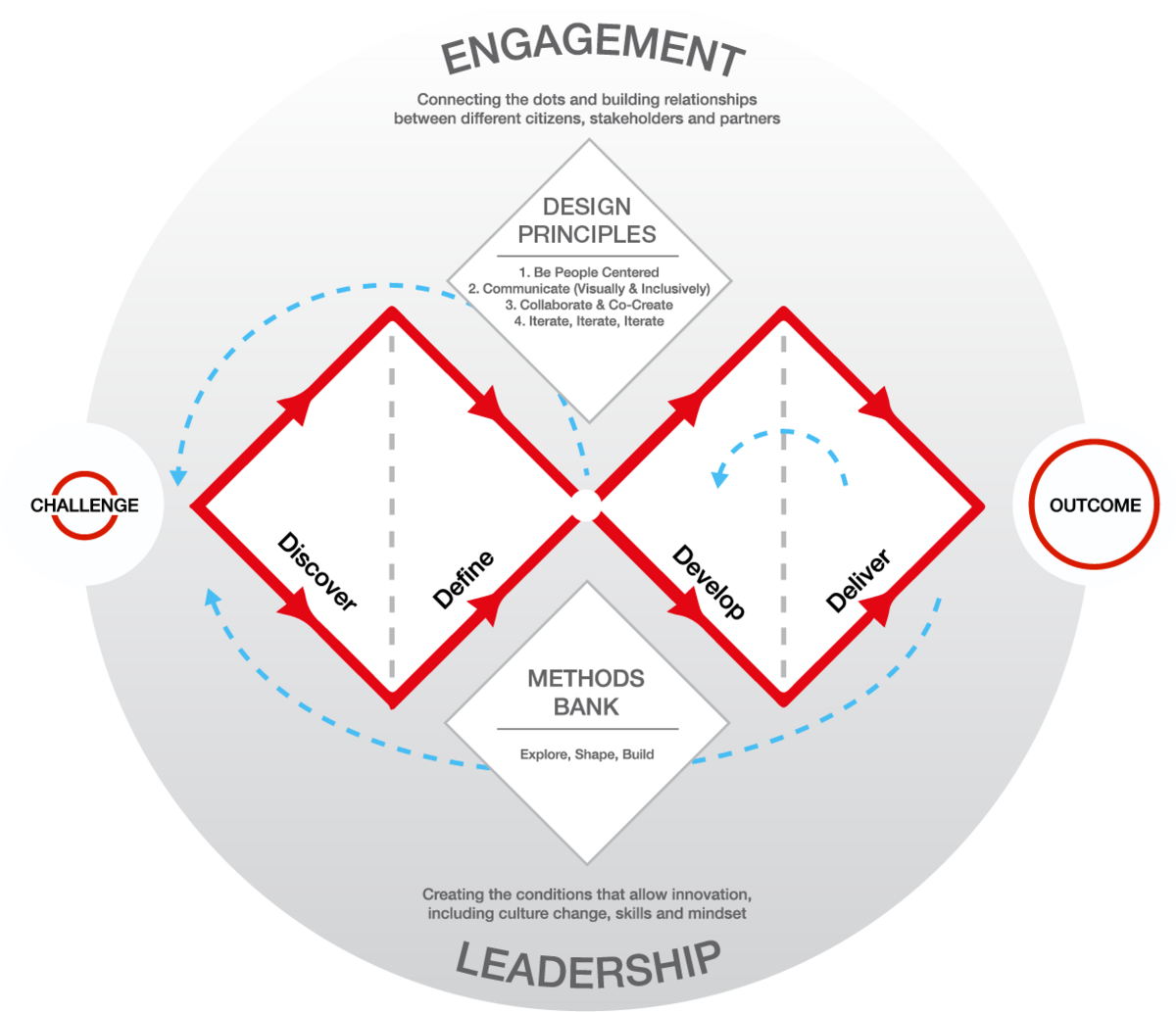
Created by the British Design Council, this 4-stage process helps you stay creative and focused:
a. Discover: Understand the real problem by talking to people, not guessing.
b. Define: Use your insights to clearly name the challenge.
c.Develop: Brainstorm ideas, draw inspiration, and work with others.
d. Deliver: Test out your top ideas, keep what works, and ditch what doesn’t.
(Source: Created by the British Design Council, it offers a clear, visual framework with four stages: Discover, Define, Develop, and Deliver.This work by the Design Council is licensed under a CC BY 4.0 license.)
✔ Bonus: The Double Diamond is perfect for environmental challenges when you weave sustainability into every stage.
-
Helps you think big-picture—considering social and environmental boundaries while planning long-term.
-
Pushes you to design products and systems that are good for people, the planet, and the economy—right from the start.
Why It Matters
Design Thinking isn’t just about art, aesthetics, or flashy ideas. It’s about:
Tackling real problems creatively
Thinking in systems (not silos)
Building a better future—step by step
Yes, climate change is complex. But with creativity, collaboration, and the right tools, you can help design a world that works for everyone—including nature.
Check out the Circular Design Guide:
https://www.ellenmacarthurfoundation.org/circular-design-guide/overview
for hands-on tools to get started.
Discover more on DISRUPTIVE innovation with CLAY unit 1.1 Linear vs. Circular economy - Lesson 7 - Disruptive innovation:
2.3 Green Skills That Will Shape Your Future
Want a job that helps the planet and builds your future? The world is shifting toward green, and that means new skills are in demand. Whether you're into tech, design, business, or science, there's a place for you in the sustainability space.
Here are 5 essential green skills to get you future-ready and climate-smart
1. Tracking Your Impact
-
What it is: Learning how to measure the carbon footprint of things like products, buildings, or events.
Why it matters: If we can track pollution, we can reduce it. Companies need people who can find smarter, cleaner ways to operate.
Skills involved: Data analysis, critical thinking, systems thinking.
2. Understanding Eco Rules
-
What it is: Knowing how environmental laws work—local and global.
Why it matters: Green careers aren’t just about science; they also need people who can navigate laws, push policy, and make sure companies follow the rules.
Skills involved: Research, communication, policy awareness.
3. Telling the Sustainability Story
-
What it is: Helping organizations report on how they're doing in areas like environment, social justice, and governance.
Why it matters: People and investors want to see real action. If you can tell a clear, honest story with data, you're valuable.
Skills involved: Data storytelling, research, transparency, communication.
4. Reading the Climate Signs
-
What it is: Using data to understand climate trends and risks.
Why it matters: Climate affects everything. We need people who can interpret that data and help others plan smart for the future.
Skills involved: Data analysis, environmental science, strategic thinking.
5. Creative Thinking & Fast Adapting
-
What it is: Coming up with new ideas and staying flexible in the face of change.
Why it matters: Green problems are complex—and we need bold thinkers to solve them. These are the skills behind sustainable startups, innovation, and system change.
Skills involved:Problem-solving, creativity, entrepreneurship, adaptability.
Want to Make a Bigger Impact? Try Green Entrepreneurship
Green entrepreneurship means starting a business that helps solve environmental problems and makes money. It’s about being creative, bold, and planet-focused.
Instead of following traditional business models, green entrepreneurs are building the future with smart, sustainable ideas.
What Makes a Green Business?
-
Your business isn’t just about profit—it’s about protecting resources and building something that lasts.
-
From eco-friendly products to zero-waste apps, green businesses thrive on fresh ideas.
-
True impact means balancing social good, environmental care, and economic success.
-
Design for reuse, repair, and recycling. Waste-free is the new normal.
2.4 What is Eco-Design?
Eco-design is all about creating products that are better for the environment. Instead of only focusing on how something looks or works, eco-design also asks: How will this affect the planet? It looks at the entire journey of a product—from where the materials come from, to how it’s made, used, and eventually thrown away or recycled.
The goal is to reduce the damage we do to the environment at every stage.
One of the main tools that helps with this is called Life Cycle Assessment, or LCA. It’s kind of like a report card for a product’s environmental impact, showing how much energy, water, or materials are used, and how much pollution or waste is created along the way.
Why Does LCA Matter?
LCA helps designers and companies make smarter choices. For example, if a product creates a lot of pollution during manufacturing, the design team can look for cleaner ways to make it. If the materials used are hard to recycle, they might switch to something more eco-friendly. LCA helps spot these issues early, so better decisions can be made.
It also pushes creativity. Designers are challenged to come up with new ideas that are not only cool but also sustainable. Plus, when companies use LCA, they can be more honest with customers about how green their products really are—and avoid “greenwashing” (pretending something is eco-friendly when it’s not).
Another bonus? Governments and consumers are starting to care more about sustainability. So using tools like LCA helps businesses meet environmental standards and stand out in a crowded market.
3. Case Study
Orange Fiber: a sustainable fashion startup
Orange Fiber is a sustainable textiles and fashion innovation company based in Catania, Sicily. It was founded in 2014 by Adriana Santanocito and Enrica Arena, two young entrepreneurs passionate about creating eco-friendly solutions. The company focuses on developing innovative fabrics that contribute to environmental sustainability while promoting circular economy principles.
-
Orange Fiber transforms waste from citrus juice production—like orange peels and pulp—into high-quality, sustainable fabrics. These eco-friendly textiles are then used by fashion brands to create clothing that looks and feels luxurious but has a much lower environmental impact.
-
Italy is one of the world’s top producers of citrus fruits, especially in Sicily, but this also creates tons of waste. Orange Fiber saw this as an opportunity—not a problem. By turning what would be discarded into a valuable resource, they embody the circular economy in action.
-
Food waste
Textile industry pollution
Resource overuse
-
In 2017, Orange Fiber collaborated with Salvatore Ferragamo, one of Italy’s most famous luxury fashion brands, to launch a fashion collection made with their citrus-based fabric.
They've won several international sustainability awards and have been recognized as a leading example of green innovation from Italy.
Their products are 100% made in Italy, promoting local innovation and sustainable development.
Big Achievements
-
Both founders were in their early 30s when they launched the company and had backgrounds in communication and fashion. They used creativity, sustainability, and entrepreneurship to solve real-world environmental challenges—proving that young people can drive powerful change.
Youth & Impact
Objective:
Explore the principles of the circular economy by making strategic decisions to build a sustainable company.
Scenario:
You are the founder of a new company aiming to thrive within the circular economy framework. Your goal is to develop a business model that prioritizes sustainability, resource efficiency, and waste reduction.
Instructions:
-
Selecting materials for your products (e.g., recyclable, renewable, or non-renewable).
Designing packaging (e.g., single-use vs. reusable).
Managing supply chains to reduce environmental footprint.
Creating take-back or recycling programs.
Make Strategic Decisions
-
Focus on designing products or services that last longer and can be repaired or reused.
Plan ways to reduce waste and maximize resource use.
Consider how to recycle materials or recover value at the end of product lifecycles.
Understand Circular Economy Principles
-
After each decision, evaluate the impact on your company’s sustainability, costs, customer satisfaction, and environmental footprint.
Reflect on Outcomes
-
Build a company that balances profitability with strong circular economy values and achieves long-term environmental and economic success.
This activity engages participants in critical thinking about sustainable business design and helps them understand how circular economy principles can be applied practically to create resilient, responsible companies
Goal
Case Study
EU Circular Economy Action Plan – Made Simple
The EU Circular Economy Action Plan is a major strategy created by the European Union to help Europe become more sustainable. It focuses on reducing waste, using resources more efficiently, and making products that last longer. The plan is part of the EU’s broader goal to reach climate neutrality by 2050, meaning Europe wants to stop adding greenhouse gases to the atmosphere by that year.
One big part of the plan is making sure products are designed to be reused, repaired, and recycled. This includes things like electronics, packaging, clothing, and building materials. The EU wants companies to stop making products that break easily or can’t be fixed. Instead, they should create items that can be used again and again. This helps protect the environment and saves money for consumers.
-
The plan also supports green jobs and innovation.
One example of the EU Circular Economy Action Plan in action is the Circular Electronics Initiative. This program focuses on making electronic devices, like phones, laptops, and appliances, easier to repair, reuse, and recycle. The EU is working to create rules that require manufacturers to provide spare parts, repair manuals, and longer-lasting batteries. This helps reduce electronic waste, which is one of the fastest-growing waste streams in Europe. It also gives consumers more control over their devices and helps them save money.
Discover more in CLAY Unit 3.2 European commission - The circular economy action plan - lesson 6- Key product value chain:
Right to Repair
Another part of the plan is the Right to Repair, which gives people the legal right to fix their own products or have them repaired easily. This is already being applied to items like washing machines and refrigerators, and the EU plans to expand it to more products. These changes are helping shift Europe away from the “buy-use-throw-away” mindset and toward a system where products are built to last and stay in use longer.
What is the situation at a global level ? Discover more about the Circularity Gap Report in CLAY Unit 2.3 Circularity measurement - Lesson 4 - Metrics for measuring circularity:
DRAG-and-DROP
Match Circular Strategies to Real-World Examples
Drag each circular strategy and drop it onto the example it best matches.
Strategies
Repurpose
Reduce
Refurbish
Recycle
Rethink
Reuse
Remanufacture
Refuse
Repair
Examples
Avoiding single-use plastic bags
Thinking of ways to minimize packaging before buying
Using less electricity by turning off lights when not needed
Using a reusable water bottle
Fixing a broken zipper on a jacket
Donating old furniture instead of throwing it away
Disassembling old electronics to rebuild them into new devices
Turning old jars into plant pots
Producing a new product from recycled paper
4. Self-Assesment Quiz
Self-Assessment Quiz
-
Add a short summary or a list of helpful resources here.